Complete Guide to Local SEO for Beginners
Local SEO is one of the most powerful digital marketing strategies for small businesses, startups, service providers, and local brands that want to attract nearby customers. Whether you run a clinic, café, repair shop, agency, salon, or consultancy, local SEO ensures people in your area discover your business whenever they search for related services.
In today’s competitive online world, ranking high on Google local results, especially the Google Map Pack, is no longer optional — it is essential. This complete beginner-friendly guide created by Hawkeye Digital Creators explains everything you need to know about Local SEO, its importance, how it works, and the exact steps to grow your visibility and traffic.
What Is Local SEO?
Local SEO (Local Search Engine Optimization) is the process of optimizing your website and online presence to attract more customers from relevant local searches. These searches typically include terms like:
- “near me”
- “best ___ in Chandigarh”
- “top doctors in Mohali”
- “Taxi service near me”
- “digital marketing company in Panchkula”
Local SEO helps your business appear on:
- Google Map Pack (top 3 results with map)
- Localized organic search results
- Google Maps ranking
- Local directories and citations
Why Local SEO Matters for Businesses
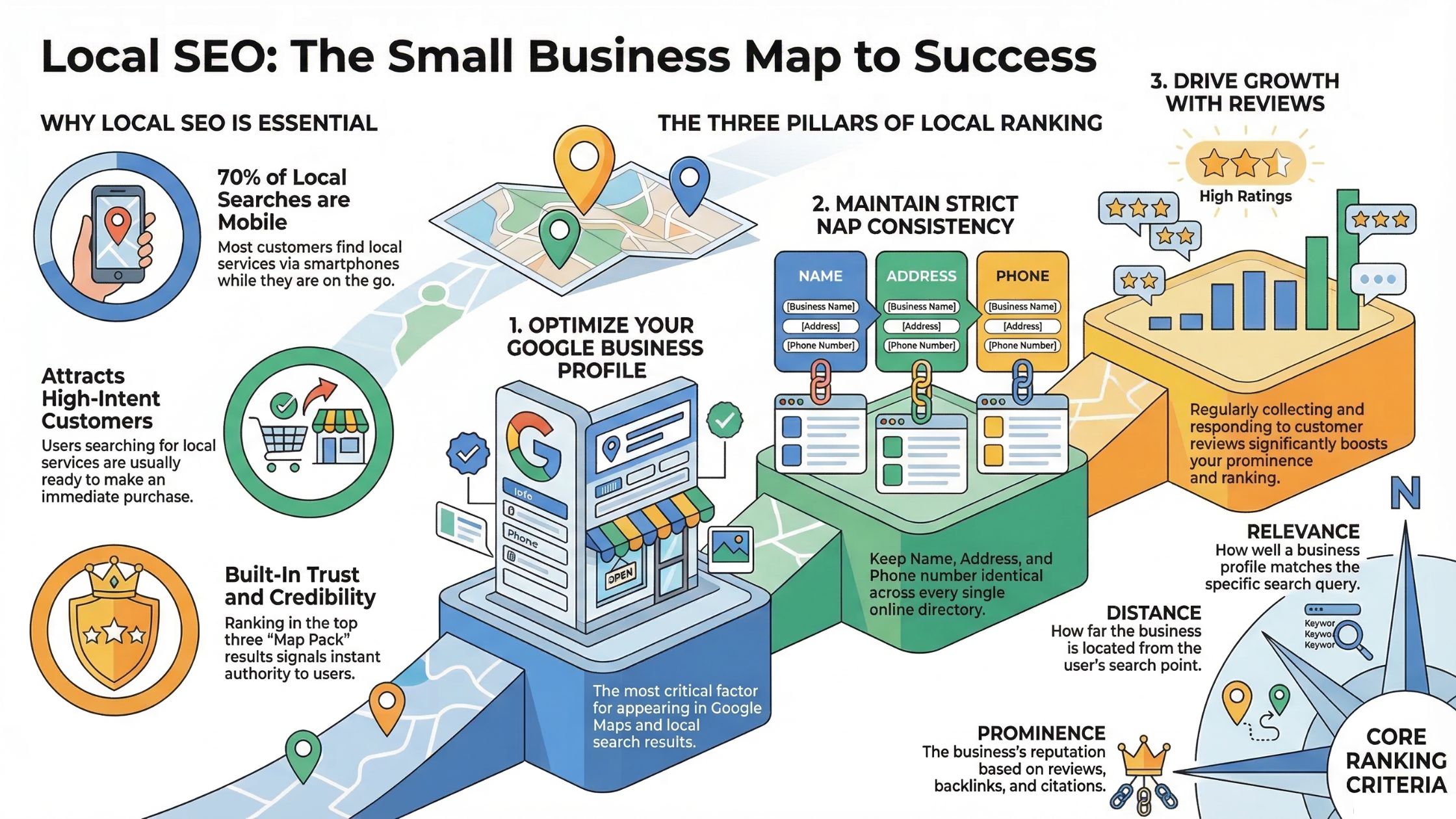
Local SEO brings high-intent, ready-to-convert users.
1. Higher Local Visibility
Google promotes businesses that are optimized for local searches. With proper optimization, you appear on the top of Google Maps, which increases clicks, calls, and footfall.
2. More Targeted Traffic
Local users searching for “plumber near me” or “dentist in Una” already know what they want. They are likely to convert instantly.
3. Builds Trust and Credibility
People trust businesses that appear at the top of local search results, especially the Map Pack.
4. Cost-Effective
Unlike paid ads, Local SEO continues to generate traffic even when you stop spending.
5. Mobile Searches Are Increasing
Over 70% of all local searches happen on mobile, making Local SEO more important than ever.
How Does Local SEO Work?
Local SEO uses a combination of ranking signals:
- Google Business Profile (GBP) optimization
- NAP consistency (Name, Address, Phone)
- Local citations
- Localized keywords
- Reviews and ratings
- Website on-page SEO
- Location-based landing pages
- Backlinks from local websites
Google uses these signals to decide:
- Which businesses show in the Map Pack
- How high your website ranks in local organic results
- How relevant your business is for a specific location and service
Step-by-Step Local SEO Guide for Beginners
Step 1: Set Up & Optimize Your Google Business Profile (GBP)
Your Google Business Profile (formerly Google My Business) is the MOST important part of Local SEO.
How to Optimize Your GBP Properly
- Enter your business name correctly
- Choose the right business categories
- Add your full address + service areas
- Upload high-quality photos of your business
- Add your website URL
- Use SEO-optimized business descriptions
- Add products/services
- Post weekly updates on Google Posts
- Add service hours
- Enable messaging for quick inquiries
Pro Tip:
Your top keyword should appear naturally in your business description.
Example: “Hawkeye Digital Creators is a top-rated digital marketing company helping businesses grow with SEO, Local SEO, social media, and website solutions.”
Step 2: Keyword Research for Local SEO
Local SEO keywords include:
- Service + Location
- Service + Near Me
- Industry-specific keywords
- Long-tail keywords
Examples of Local SEO Keywords
- “best dentist in Mohali”
- “psychiatrist near me”
- “SEO services Chandigarh”
- “cab service in Zirakpur”
Best Tools to Find Local Keywords
- Google Keyword Planner
- Google Autocomplete
- Google Trends
- Ubersuggest
- SEMrush
Step 3: Optimize Your Website for Local SEO
Local on-page SEO ensures Google understands what you offer and where you serve.
Important On-Page SEO Elements
1. Meta Titles & Descriptions
Include:
- Business Name
- Main Service
- Location
2. H1 & Headings Optimization
Use local keywords naturally.
3. Add Location Pages
If you serve multiple locations, create individual pages like:
- /chandigarh-digital-marketing
- /mohali-seo-services
4. Add Your NAP (Name, Address, Phone)
Place your NAP info in:
- Website footer
- Contact page
- Schema markup
5. Local Schema Markup (Structured Data)
Implement LocalBusiness schema to help Google understand your business.
Step 4: Make Your Website Mobile-Friendly
More than 70% of local customers search on mobile devices.
Improve Your Mobile Experience
- Fast loading pages
- Simple navigation menu
- Click-to-call buttons
- Optimized images
- Clean layout
Google rewards websites that load under 2 seconds.
Step 5: Build Local Citations
Citations are mentions of your business name, address, and phone number on other websites.
Important Citation Websites
- Justdial
- IndiaMart
- Sulekha
- Yelp
- TripAdvisor
- Yellow Pages
- Local Chamber of Commerce
- Niche directories
Rule:
NAP must remain identical everywhere.
Even small differences harm rankings.
Step 6: Collect Reviews & Ratings
Reviews are a major ranking factor.
Why Reviews Matter
- Improve Google ranking
- Increase trust
- Boost click-through rates
- Influence customer decisions
Tips to Get More Reviews
- Ask happy customers directly
- Share a review link via WhatsApp or SMS
- Reply to every review positively
Google loves active business profiles.
Step 7: Build Local Backlinks
Local backlinks = links from websites in your area.
Best Local Backlink Opportunities
- Local bloggers
- Local news portals
- Local business associations
- Sponsoring events
- Testimonials exchange
- Local guest posts
High-quality local backlinks help you outrank competitors quickly.
Step 8: Create Local Content to Increase Visibility
Content is the backbone of Local SEO.
Publishing helpful location-based content increases relevance.
Examples of Local Content Ideas
- “Best Cafes in Mohali”
- “Top Hospitals Near Panchkula”
- “Local Digital Marketing Tips”
- “How Local SEO helps businesses in Chandigarh”
Google rewards websites that help users.
Step 9: Optimize for Voice Search
Over 50% of local searches come from voice commands like:
- “Hey Google, best salon near me”
- “Which is the best SEO agency in Chandigarh?”
Voice Search Optimization Tips
- Use conversational keywords
- Create FAQ pages
- Provide short and direct answers
- Optimize for mobile
Step 10: Track Your Local SEO Performance
Use the following tools for monitoring:
1. Google Analytics
Track traffic, conversions, and user behavior.
2. Google Search Console
Monitor keyword rankings, impressions, and clicks.
3. Google Business Insights
Shows:
- Calls
- Messages
- Profile visits
- Search queries
4. Local Rank Tracker Tools
- BrightLocal
- Local Falcon
- SEMrush Position Tracking
Common Local SEO Mistakes to Avoid
- Using inconsistent addresses online
- Not optimizing Google Business Profile
- Poor quality or no reviews
- Slow mobile website
- No local keywords
- Stuffing keywords unnaturally
- Duplicate location pages
Avoid these mistakes to grow faster.
Local SEO Checklist for Beginners
- Google Business Profile fully optimized
- Local keywords added to website
- NAP consistent everywhere
- High-quality images uploaded
- Mobile friendly website
- Reviews collected regularly
- Local content published
- Local backlinks created
- Track performance monthly